Ethnopedagogical Leadership and Noble Character Formation: A Phenomenological Study in an Islamic Elementary School
Keywords:
Ethnopedagogical Leadership; Motivation; Communication; HabituationAbstract
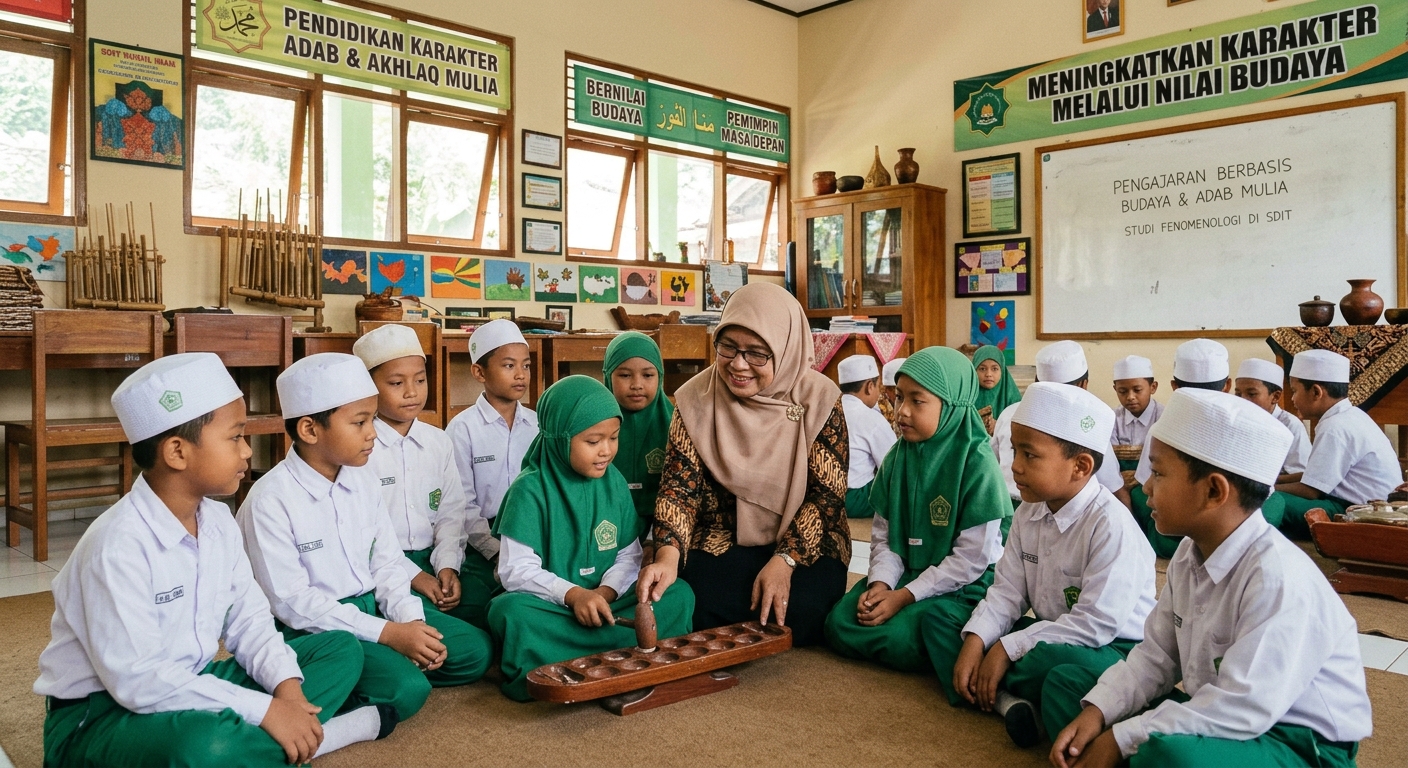
This study examines ethnopedagogical leadership and its relationship with the cultivation of noble character at MI Tarbiyatul Akhlaq Wedoroanom. The study employed a qualitative approach with a phenomenological design. Data were collected through interviews, observations, and documentation involving the principal and teachers. The findings indicate that ethnopedagogical leadership is implemented through three Javanese leadership principles: Ing Ngarsa Sung Tuladha, Ing Madya Mangun Karsa, and Tut Wuri Handayani. These principles are reflected in the principal’s exemplary behavior, teacher participation in decision-making, motivation, communication, and support for professional development. The study also found that ethnopedagogical leadership is closely related to noble character cultivation through daily habituation, including greeting, handshaking, respecting teachers, discipline, and mutual care. The study concludes that ethnopedagogical leadership provides a culturally grounded leadership model that connects local wisdom, school culture, and character education. Future research should examine this model across multiple schools and cultural contexts.